By MICKLE AUDIO · 2026-11-11
The key difference is where amplification lives
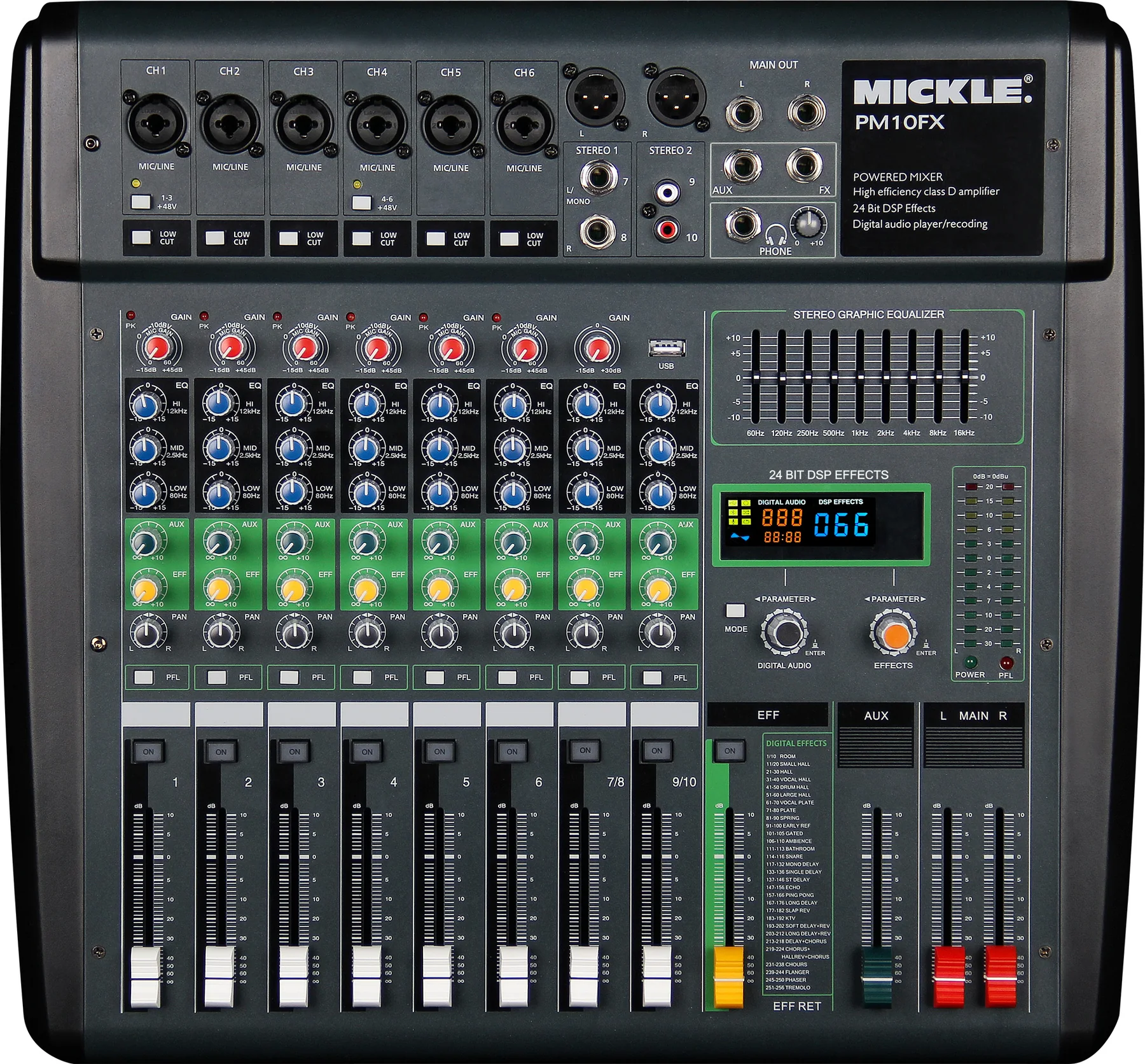
A powered mixer combines mixing controls and a power amplifier in one product. A separate PA power amplifier takes a suitable signal from a mixer or processor and supplies the amplification for passive loudspeakers. A mixer with a USB socket or an external power supply is not necessarily a powered mixer.
An integrated unit can simplify a portable setup. A separate mixer and amplifier can make it easier to choose the mixing surface and amplification independently. The better choice depends on your sources, speakers, operating workflow and installation, not just the largest wattage on a product page.
Start with the loudspeakers and the wiring
Identify whether the speakers are passive or have built-in amplification. Check the speaker documentation and the output type on the mixer or amplifier; a speaker-power output and a line-level output serve different roles. Never choose a connection solely because the plugs appear to fit.
For passive speakers, provide the intended connection arrangement and rated impedance. Ask for confirmation of the supported load and output mode for the exact amplifier. If bridge operation is being considered, verify its wiring and permitted load in the relevant manual rather than assuming the stereo limits also apply.
Compare ratings under the same conditions
Compare power figures only after checking impedance, channel configuration and the stated measurement conditions. Do not apply one model's output rating to a whole series. A brief peak number and a rating measured under different conditions are not a like-for-like comparison.
The PM10FX product page lists 2 x 380 W at 4 ohms for that model. The CA+ amplifier page has separate model and load-dependent figures and 2U/3U chassis formats. These are starting points for comparing products, not a guarantee that either will suit any particular speaker combination.
Do not overlook the mixing section
List the microphones, instruments and stereo sources required at the same time, then check spare inputs, monitor sends, effects and recording needs. An amplifier's output rating does not tell you whether the mixer's input layout will handle your event.
Consider rack space, airflow, transport and the available power supply as part of the system. A separate amplifier also requires an appropriate upstream mixer or processor and suitable interconnections. Ask which cables and accessories are included in the quoted configuration.
Prepare a useful PA quotation request
Send the speaker model or specification sheet, number of speakers, intended wiring, venue use and source list. Add the destination's power-supply requirements and whether a rack or portable format is preferred. The supplier can then discuss the relevant mixer, amplifier and connector configuration.
For distribution or private-label orders, also include quantity, branding requirements and destination market. Confirm the technical configuration, documentation, price, shipping terms and lead time in the quotation; this general guide does not set those commercial terms.
Related mixer resources
Compare powered mixers
Browse integrated mixing and amplification formats for portable PA.
Compare PA power amplifiers
Review CA+ and M Series model-dependent ratings and connections.
PM10FX powered mixer
View the input layout, effects and model-specific amplifier rating.
CA+ amplifier series
Compare stereo/bridge specifications by model and load.
Technical background references
General background only. MICKLE / AMIXS model specifications are listed in the linked product pages; these references do not imply third-party endorsement.